
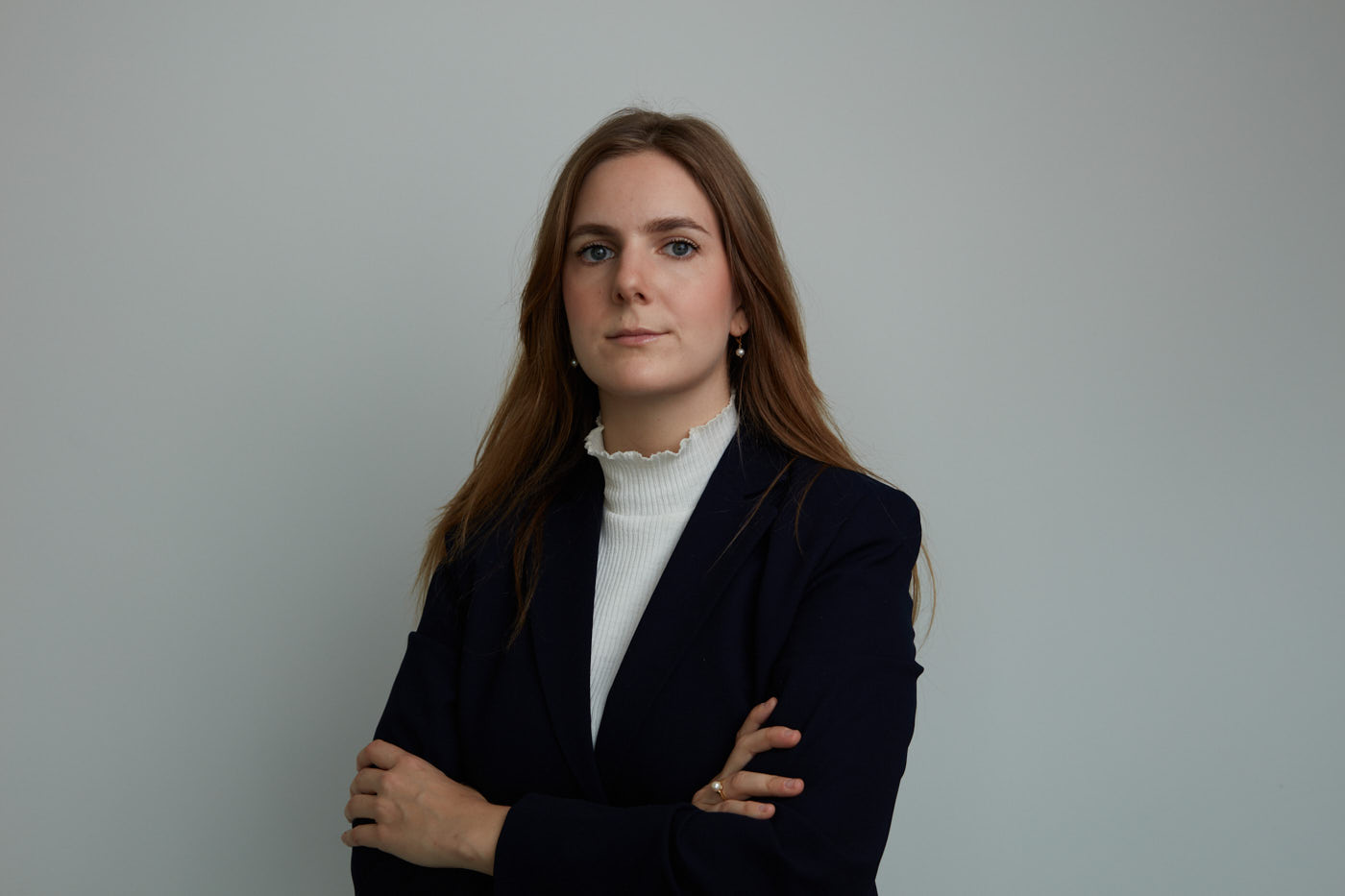
Mallorie Ashton-Lomax
Mallorie est titulaire d’un Bachelor et d’un Master en droit de l’Université de Genève ainsi que du brevet d’avocate. Elle a notamment travaillé au sein de l’Office fédéral de la culture, au Service spécialisé du transfert international des biens culturels comme juriste. Pour elle, le débat relatif à la place donnée au patrimoine culturel constitue un vecteur essentiel pour interroger son rôle dans le développement de l'identité individuelle et collective, au même titre que les autres moyens d'expression artistique. Mallorie a co-fondé l’association en 2026.
Ma vision de l’art
Une exposition qui t’a marquée ? La rétrospective d’Alice Neel au Centre Pompidou à Paris. Des lumières tamisées et une ambiance intimiste (partagée tout de même avec une centaine de visiteurs) pour faire le tour de ses portraits et de son évolution artistique et découvrir une femme engagée dotée d’une force et d’un talent impressionnants. Un moment hors du temps.
Un support que tu conseilles pour se familiariser avec la question du droit du patrimoine culturel ? Sans aucun doute l’émission Last Week Tonight with John Oliver intitulée “Museums”. Avec un brin d’humour à l’anglaise, le présentateur fait un excellent travail de vulgarisation des problématiques liées à la destruction et au pillage de biens culturels ainsi qu’à leur vente à des institutions et des particuliers.
Dernières publications
-
Human remains repatriation: cultural property law and beyond
Introduction: The Case of D’Artagnan In March 2026, an archaeological discovery shook the city of Maastricht in the south of the Netherlands and made international headlines: the mortal remains of D’Artagnan, the famous musketeer, might have been found in a local church. D’Artagnan, made famous by Alexandre Dumas’ novels and 150 years’ worth of adaptations, was modelled after Charles de Batz de Castelmore d'Artagnan, a French nobleman who served as captain of Louis XIV’s Musketeers of the Guard. He died during the Siege of Maastricht in 1673 and is assumed… -
Voluntary Restitutions of Cultural Property and the DARCA initiative
Translated from the French original. N.B.: In this article, the terms ‘cultural property’ and ‘object’ are used interchangeably and synonymously to refer to artistic and cultural creations, religious artefacts and human remains claimed by their States and communities of origin. It is understood, however, that not all of these are necessarily included in the definition of cultural property as set out in the 1970 UNESCO Convention. In May 2026, Arthur Brand, a detective specialising in the restitution of works looted during the Second World War, announced that the painting Portrait… -
Les restitutions volontaires de biens culturels et l’initiative DARCA
N.B. : Dans cet article, les dénominations « bien culturel » et « objet » sont employés à tour de rôle et de manière équivalente pour se référer tant aux créations artistiques et culturelles, aux objets de cultes et aux restes humains réclamés par leurs États et communautés d'origine. Il est toutefois entendu que tous ne sont pas nécessairement compris dans la définition de bien culturel tel que reflété par la Convention UNESCO de 1970. En mai 2026, Arthur Brand, détective spécialisé dans la restitution d’œuvres spoliées pendant la Seconde… -
An Introduction to the Notion of Cultural Property under the Federal Act on the International Transfer of Cultural Property
Translated from the French original. Following the devastating explosion at the Port of Beirut in 2020, a painting previously displayed on the walls of the Sursock Palace was newly identified as a work by the Italian artist Artemisia Gentileschi. The painting was restored and exhibited at the Getty Museum in Los Angeles before returning to the palace walls. The restoration work also made it possible to attribute the depiction of Hercules and Omphale to Gentileschi, rekindling interest art historians have for this work. This anecdote prompts us to reflect on… -
Une introduction à la notion de bien culturel selon la loi sur le transfert international des biens culturels
Après l’explosion dévastatrice du port de Beyrouth en 2020, un tableau, auparavant exposé sur les murs du Palais Sursock, a été nouvellement identifié comme peint par l’artiste italienne Artemisia Gentileschi. Le tableau a été restauré et exposé au sein du musée Getty à Los Angeles avant de retrouver les murs du palais. Le travail de restauration du tableau aura également permis d’attribuer la représentation d’Hercule et Omphale à Gentileschi et de renouveler l’intérêt qui lui est porté par les historiens de l’art. Cette anecdote nous permet de nous interroger à…